
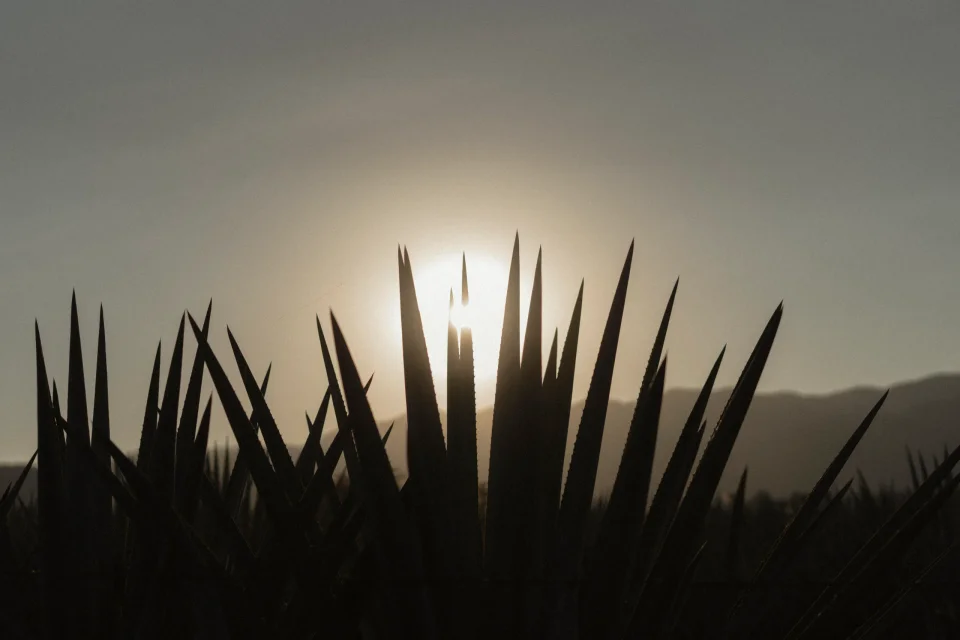
Agave is a genus of plants, not the name of a single crop. Different agaves are used for different Mexican spirits. For tequila, the permitted plant is Agave tequilana Weber, blue variety, often called blue Weber or Weber Azul.
A few names worth knowing
Espadín, commonly used for mezcal, is Agave angustifolia. Tobalá is commonly associated with Agave potatorum; Agave cupreata is another mezcal agave.
For tequila, the permitted plant is blue Weber. Using it is one requirement; the protected origin and production standard must also be met.
Why blue Weber?
Blue Weber’s role is written into tequila’s production standard and protected origin. This particular agave, an authorised place and the way it is made together establish tequila’s identity.
For Don Santos, Weber Azul is the foundation of all three expressions. Barrel maturation comes later.
Inside the piña
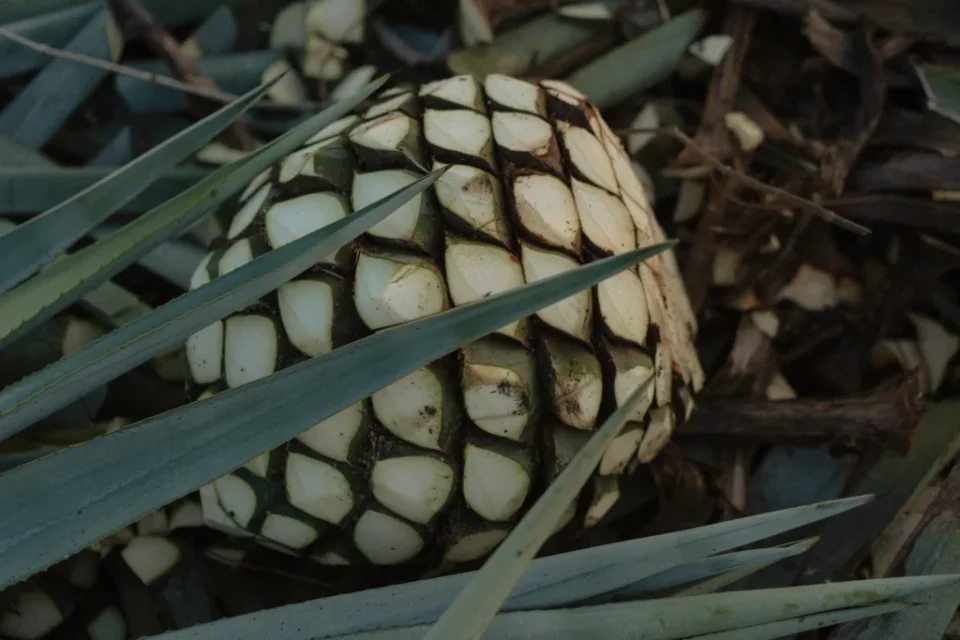
The piña is the dense heart revealed when the leaves are removed. It stores the carbohydrates prepared through cooking for fermentation. Its resemblance to a pineapple gives it its name, rather than a relationship to that fruit.
Readiness takes time
Agave grows over years. Jimadores assess its readiness in the field, then use a coa to remove the leaves at harvest. Those years of cultivation come before the spirit’s time in oak.
From plant to label
“100% agave” identifies the source of fermentation sugars. Blanco, Reposado and Añejo describe the expressions. Our tequila-category guide explains how to read those details together.